Gears and Gear Racks: The Building Blocks of Motion Controlled
Posted by Horace Douglas on Dec 18th 2025
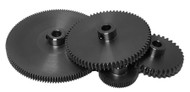
Gears and gear racks are some of the most common ways machines move, lift, and position things with precision. At their core, gears are toothed wheels to transfer motion and power from one part of a machine to another. Gear racks work a little differently by converting rotational motion into linear movement, which makes them ideal for applications where something needs to slide, lift, or travel smoothly along a path. You see these systems everywhere, from industrial equipment to automated machinery and material handling systems.
What makes gears so useful is their ability to control speed, direction, and torque. By changing the size or type of gear, machines can move faster, slower, or with more force, all while staying accurate and dependable. Gear racks add another level of flexibility by allowing that controlled motion to happen in a straight line instead of a circle. This is especially helpful in applications like conveyors, machine tools, and positioning systems where repeatable accuracy matters.
Material and manufacturing quality play a crucial role in how well gears and gear racks perform. Meticulously designed teeth, tight tolerances governed by AGMA, and the right material choice help reduce wear, noise, and vibration over time. High quality components also mean longer service life and less downtime, which is critical in industrial environments where reliability is key.
At B&B Manufacturing, we understand that choosing the right gear or gear rack can feel overwhelming, especially if you are not an engineer by trade. That is why our team focuses on making the process straightforward and approachable. To learn more about gears, gear racks, and how they fit into your application, visit us at BBman.com or give us a call on 888.889.1896. We are the Drive Solution’s Experts, and we are always happy to help.